Product Detail Page
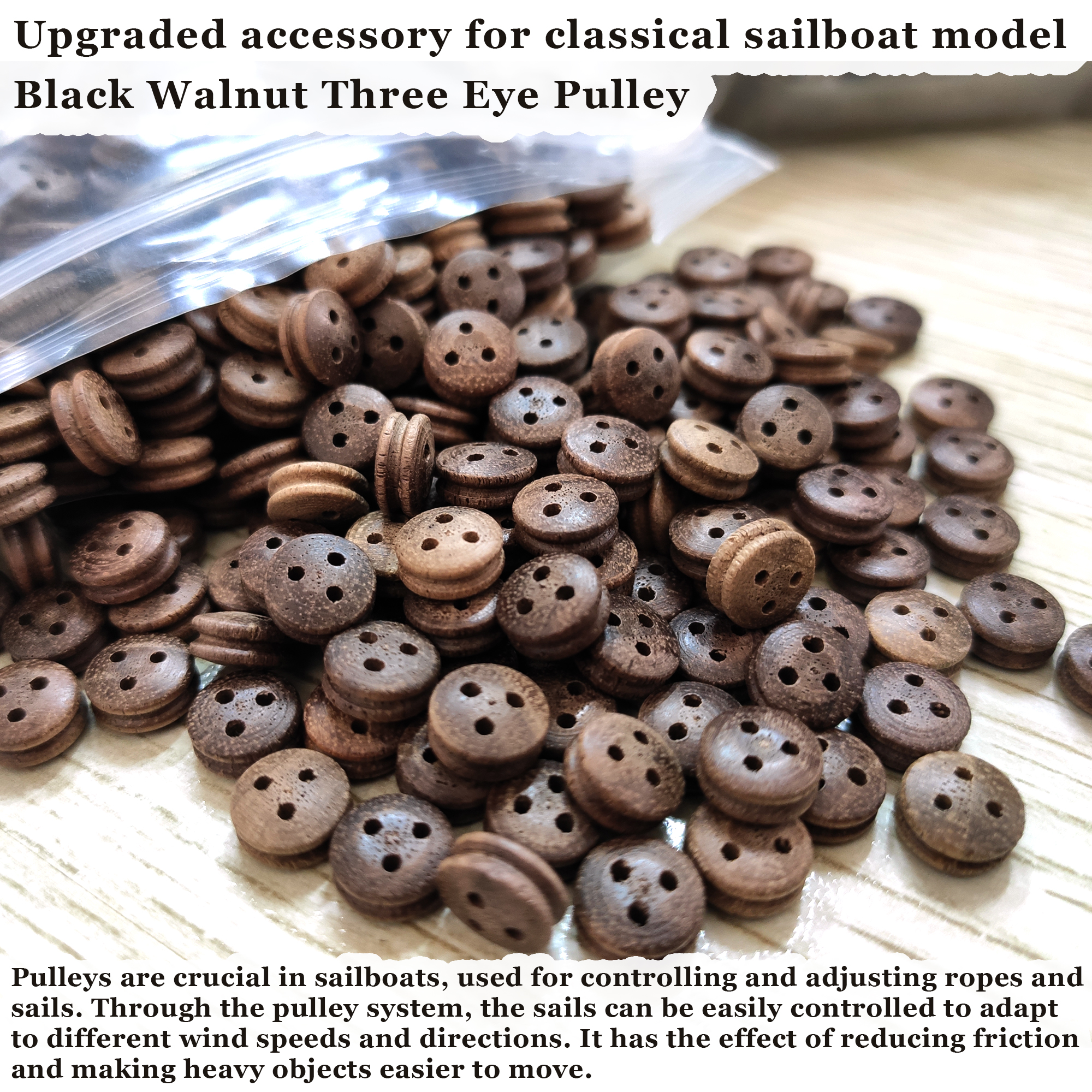
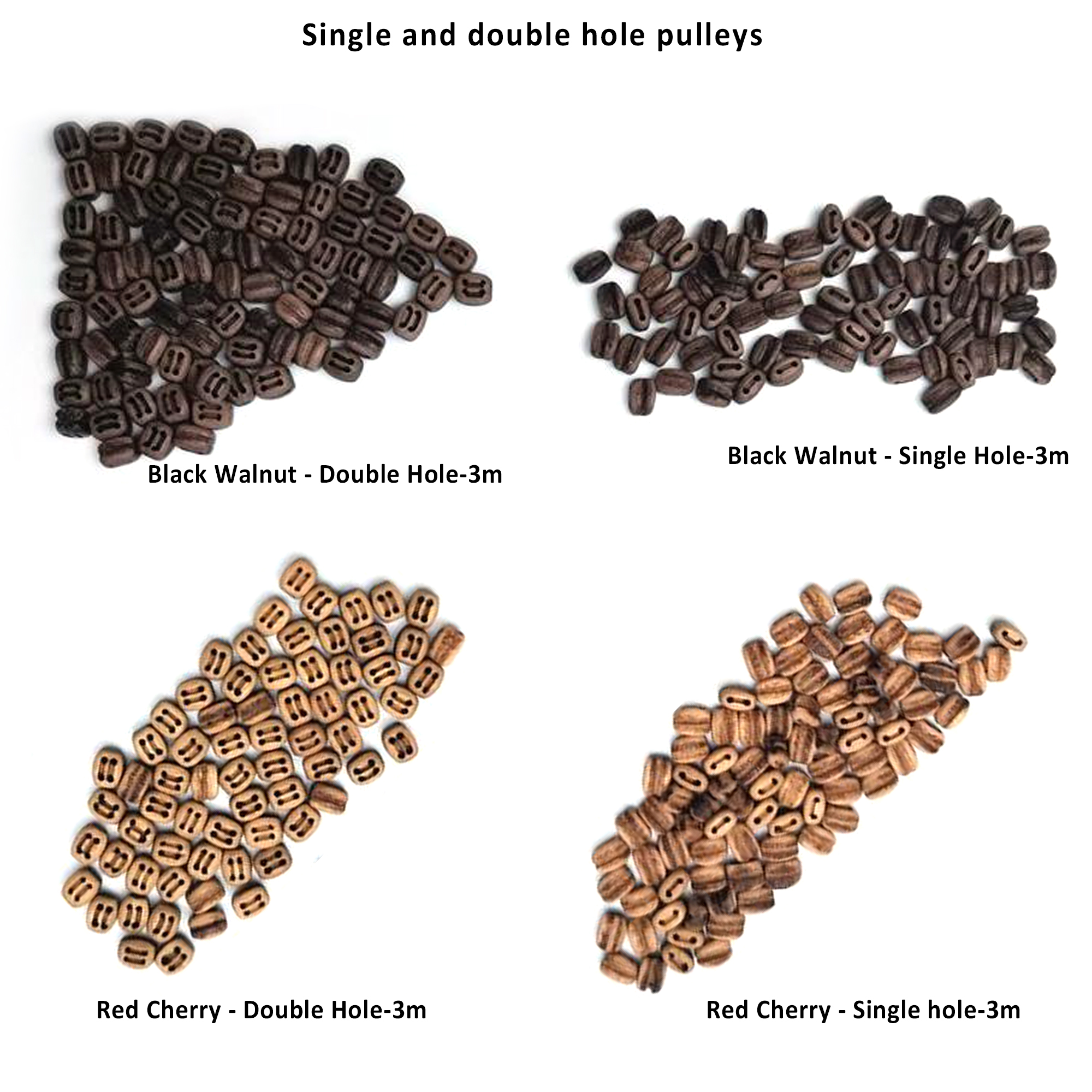
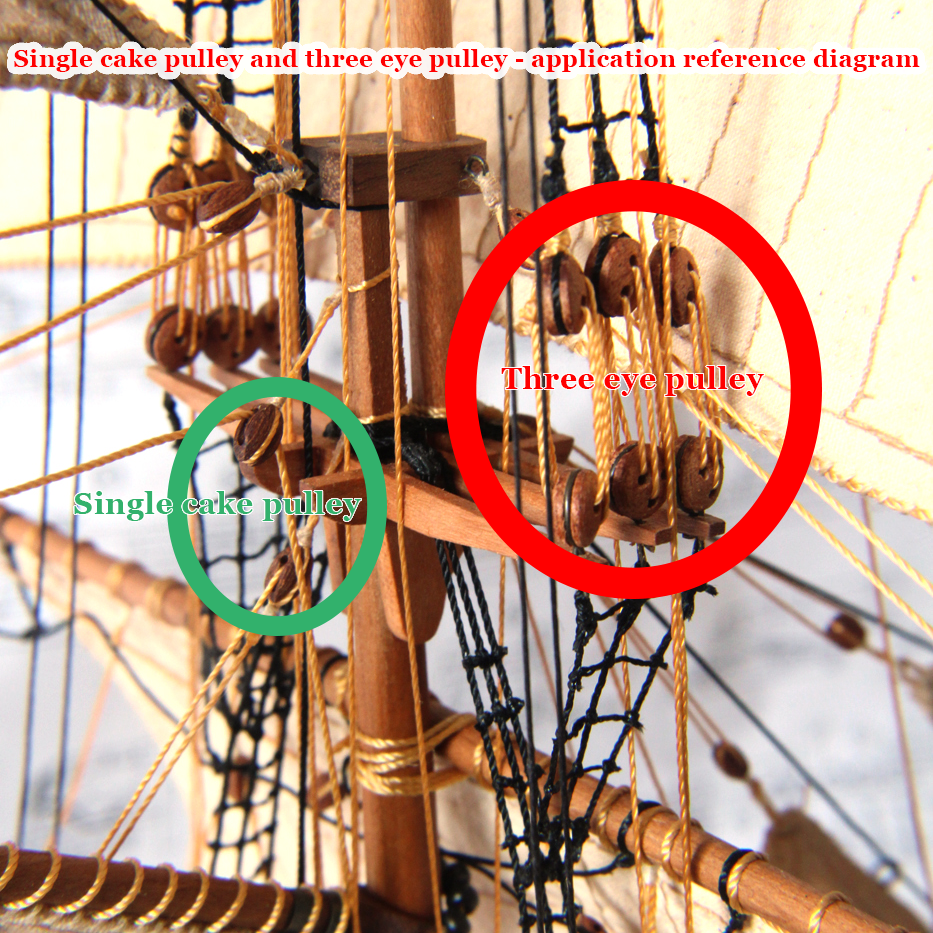
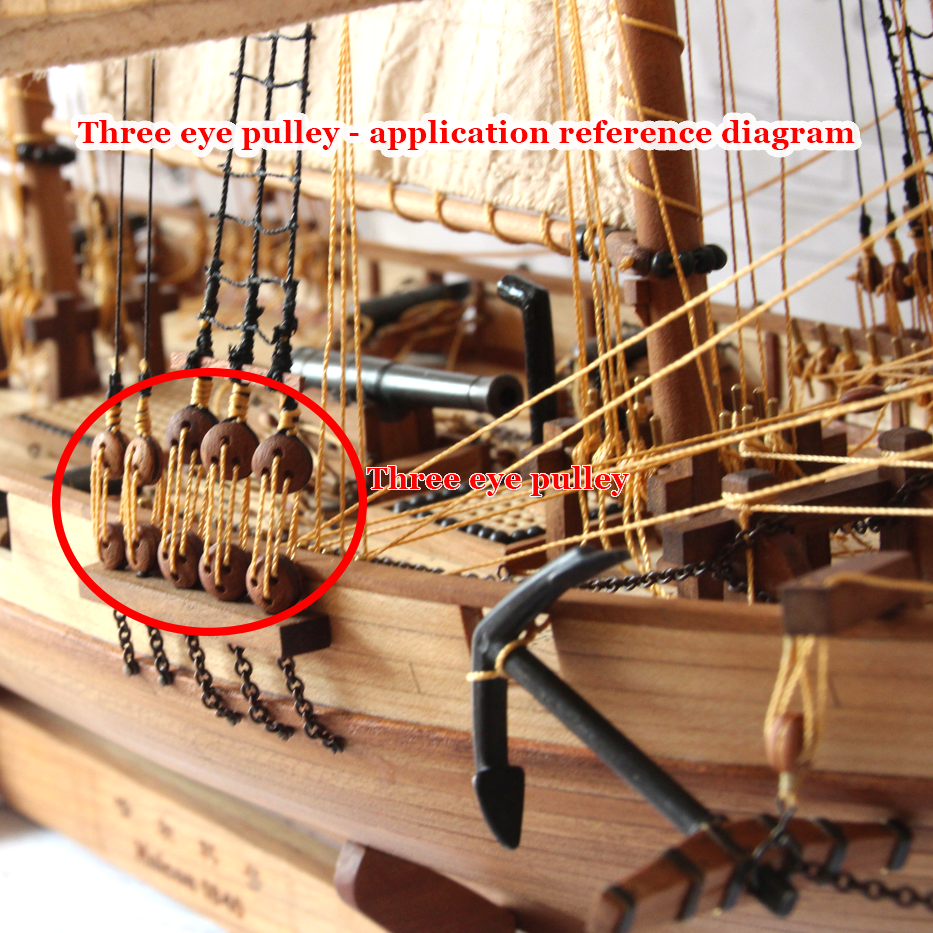
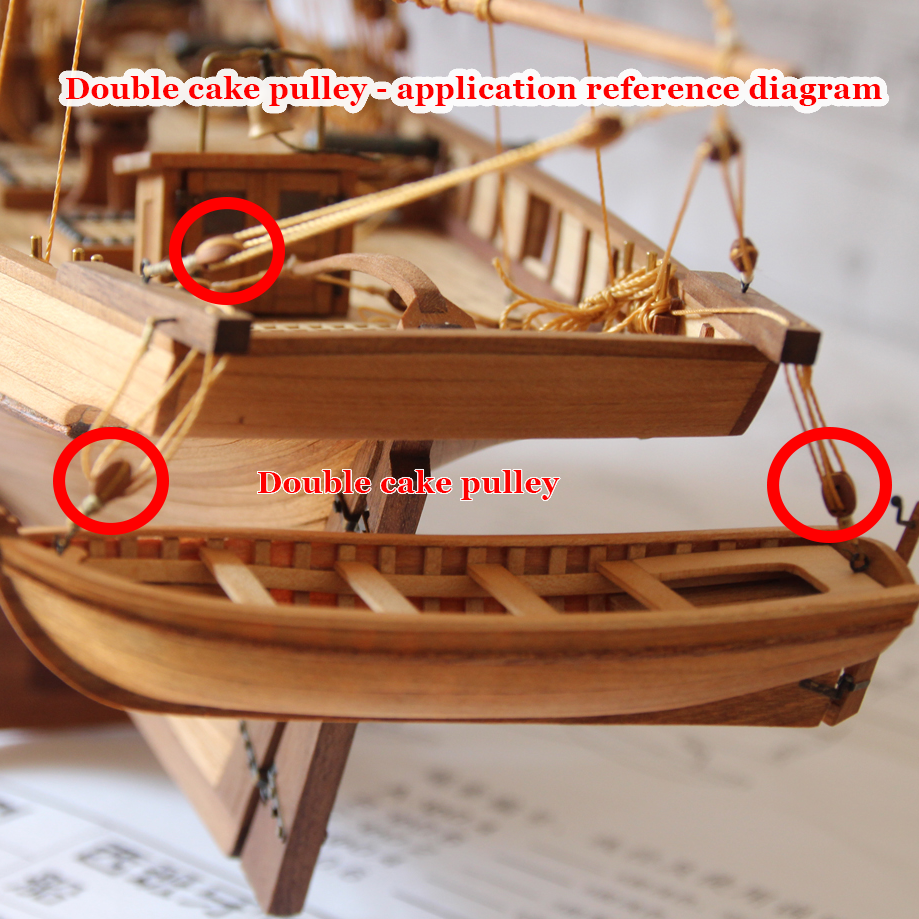
Product Name: Single-sheave Block, Double-sheave Block, Three-eye Block – Upgrade Parts for Wooden Ship Models
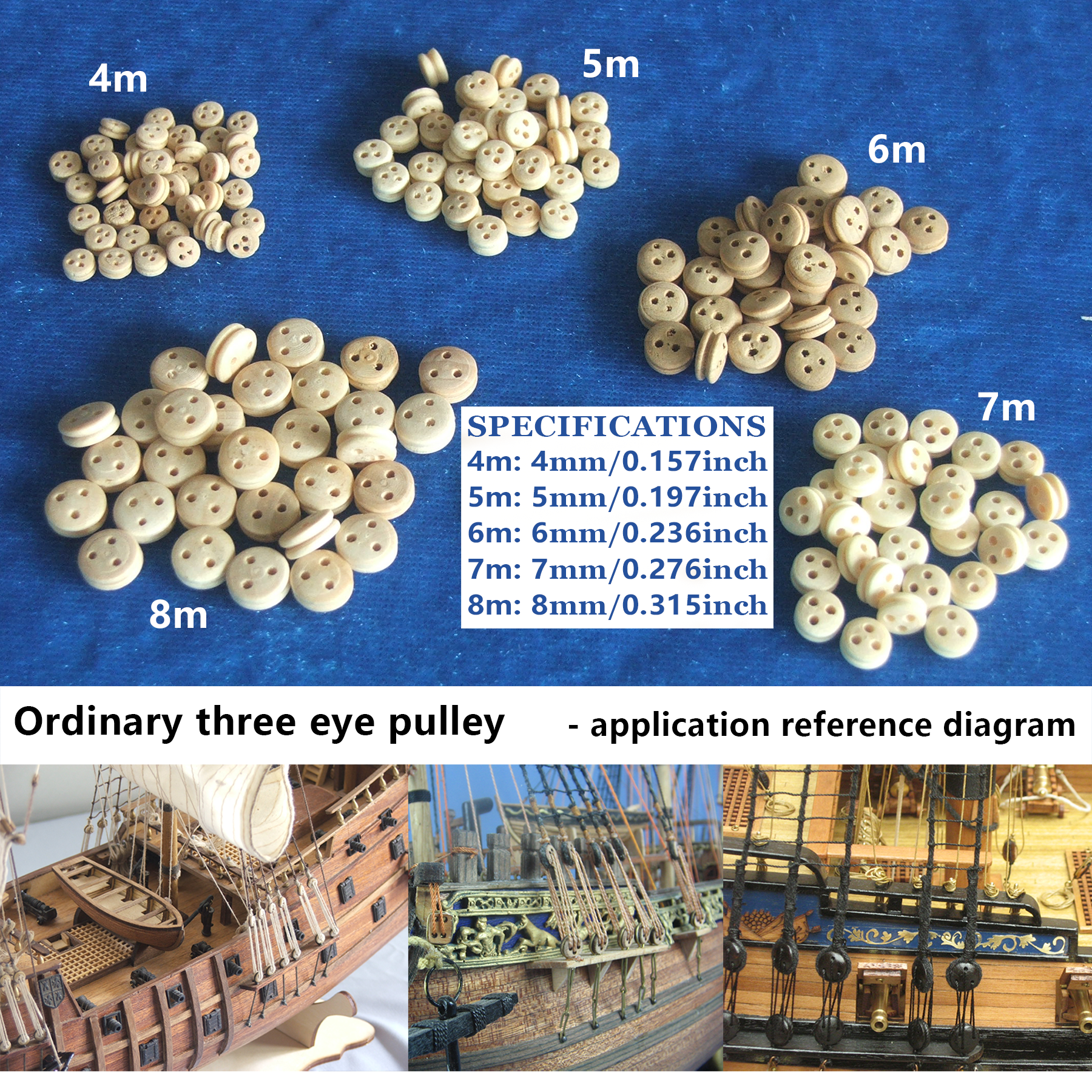
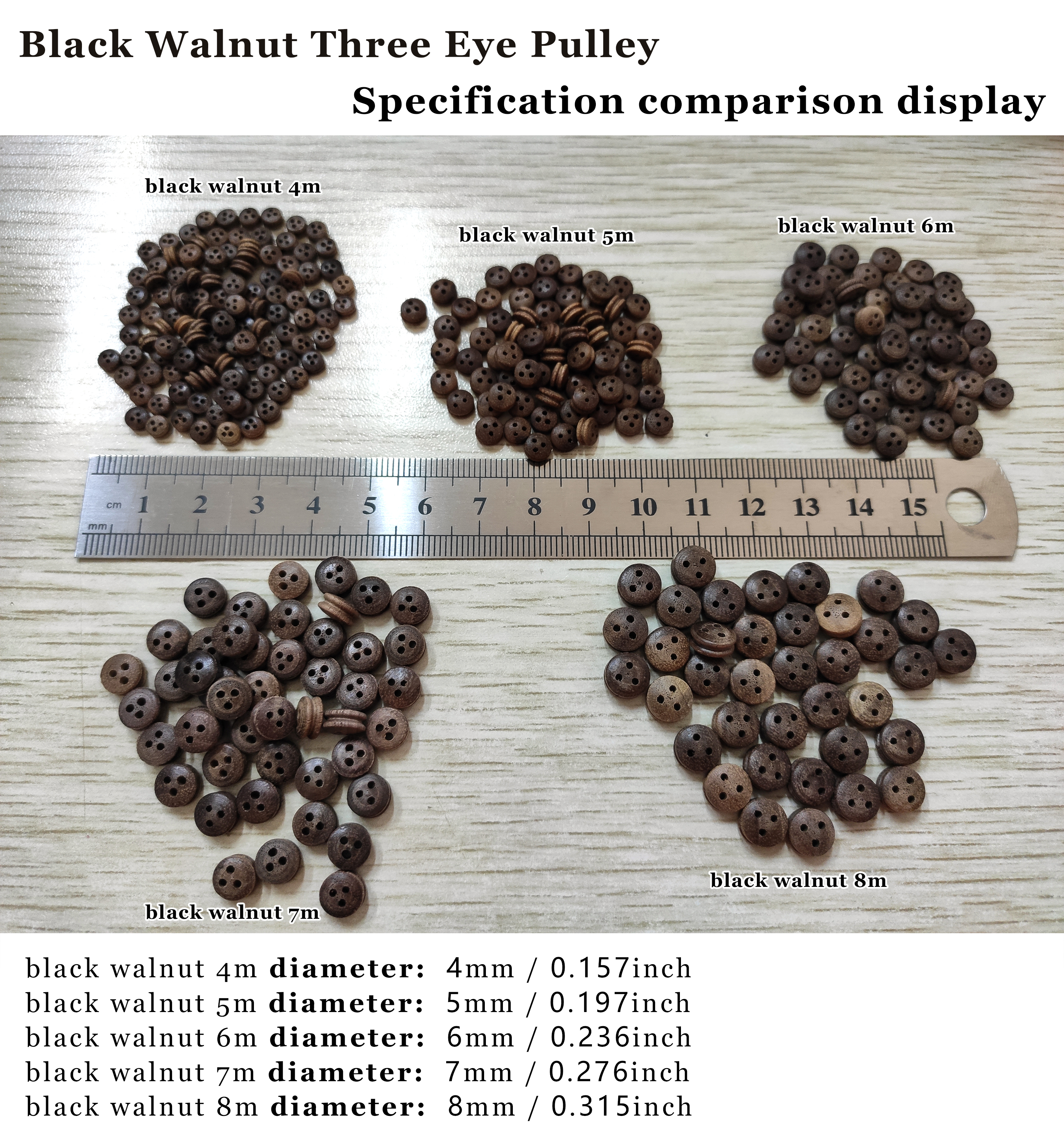
Model: Black Walnut、Red cherry、Ordinary three eye pulley
Batch Number: 2025042125
Series: Universal
Manufacturing Difficulty: Intermediate
Applicable Crowd: 14+
Recommended Tools: 【Single-hole Block】 The core function of a single-hole block is to change the direction of rope tension and has no labor-saving effect. On ship models, it is usually fixed at the top of the mast, the edge of the ship's side or the fixed fulcrum of the deck, and is used to guide the direction of the rigging and cables. For example, after the rigging of a sailing ship model hangs down from the sail surface, it turns to the deck through the single-hole block at the top of the mast, allowing the operator to pull downward at the deck position to lift the sail upward, which greatly improves the convenience of operation. 【Double-hole Block】 There are two common designs of double-hole blocks: one is two blocks arranged coaxially side by side, and the other is an integrated block with two independent guide holes. Its core functions are divided into two categories: 1. Simple labor-saving + wire separation and guidance. When used as a movable block (the block moves with the rope), the double-hole structure can share the rope tension to achieve mild labor-saving, which is suitable for adjusting the tightness of the sail surface of the ship model; 2. Double-rope separation + synchronous adjustment. When used as a fixed block, the two holes can guide two independent ropes to avoid rigging entanglement and realize synchronous fine-tuning of two stress points. For example, the side gun port ropes of the model are pulled separately through the double-hole block to achieve synchronous opening and closing of multiple gun ports. 【Three-hole Block】 The three-hole block is a "multi-functional component" in ship model rigging, which plays the role of changing tension direction and transmitting traction force. It is usually designed as a coaxial triple block or three guide holes. Its core functions are multi-line linkage + high-efficiency labor-saving, and it is mainly used in the rigging system of complex ship models: 1. Orderly guidance of multiple ropes. The three holes can guide three independent ropes at the same time to solve the entanglement problem of complex rigging. It is common in models with main sails, foresails and side sails to realize independent adjustment of multiple sails;2. Labor-saving and efficiency improvement of pulley blocks. Combining multiple three-hole blocks into a pulley block can significantly amplify the labor-saving effect, which is suitable for pulling heavy components on ship models (such as anchor chains and large canvas of simulated ship models);3. Multi-point stress balance. At the bottom of the ship model mast or the rigging intersection of the deck, the three-hole block can disperse the rope tension to avoid damage to model components caused by excessive single-point stress and improve the stability of the rigging system. For example, fixing the side shrouds or stays of the model to the bearing plate and bulwark to adjust the tension direction of the ropes to ensure reasonable stress on the rigging;During installation, the block is clamped into the stay ring and fixed with copper nails to form a stable pulley block, which reduces friction and improves transmission efficiency, making the rope movement smoother during model simulation.
Manual Update Time: No update yet
Read ManualBackground Introduction
【Single-sheave Block】
The core structure of a single-sheave block consists of a single freely rotatable wheel (commonly known as a "sheave") + a fixed bracket/hanging ring. The edge of the wheel has a groove for clamping ropes to prevent slipping off.
Core Functions:
1. Fixed Block: The bracket is fixed to the mast, ship's side or deck, only changing the direction of rope tension without saving effort. However, the rotating wheel greatly reduces friction resistance between the rope and the block, minimizes rope wear, and ensures smoother operation, making it suitable for sail rope guidance of small ships;
2. Movable Block: The bracket moves with the rope, achieving a 1/2 effort-saving effect, and is used for pulling light-load components such as fine adjustment of the yard of small sailboats and simple anchor chain retraction and release.
【Double-sheave Block】
The core structure of a double-sheave block is two coaxial and parallel rotatable wheels sharing one bracket, divided into two types: co-directional double-sheave (wheels facing the same direction) and opposite double-sheave (wheels facing opposite directions). The grooves of the wheels are adapted to ropes of different thicknesses.
Core Functions:
1. Forming a Pulley Block for High-efficiency Effort Saving: This is the core application. By winding the rope around multiple sets of double-sheave blocks and single-sheave blocks in sequence, an effort-saving pulley block can be formed with a maximum effort-saving ratio of 1/3~1/4, suitable for medium-load tasks such as main sail lifting of medium-sized ships, anchor chain retraction and release of warships, and yard angle adjustment;
2. Independent Guidance of Double Ropes & Anti-tangling: When used as a fixed block, the two wheels can guide two independent ropes respectively, avoiding cross wear of rigging, and applicable to components requiring synchronous adjustment such as dual-linked gun ports and auxiliary sail ropes of double masts.
【Three-eye Block】
The core structure of a three-eye block is an integrated rigid bracket with three fixed guide holes, without rotating wheels. The hole walls are polished smooth, and ropes are guided directly through the holes.
Core Functions:
1. Orderly Convergence of Multiple Ropes: The three holes can guide three independent ropes at the same time, solving the tangling problem of complex rigging. It is commonly used at the convergence point of the rigging of the main sail, foresail and side sail to realize independent adjustment of multiple sails;
2. Tension Dispersion Protection: When used at the bottom of the mast or stress points of the deck, it can disperse the tension of three ropes to different holes, preventing component cracking and deformation caused by excessive stress on a single point, and improving the stability of the rigging system;
3. Static Rigging Fixation: Used for positioning static rigging that does not require frequent adjustment, such as fixing auxiliary stay ropes of railings.
In ship models, the pulley system is a key component of the rigging. Single-sheave blocks and double-sheave blocks belong to rolling pulleys, while three-eye blocks belong to fixed guide pulleys. A combination of the three is required in some scenarios.
Related Products
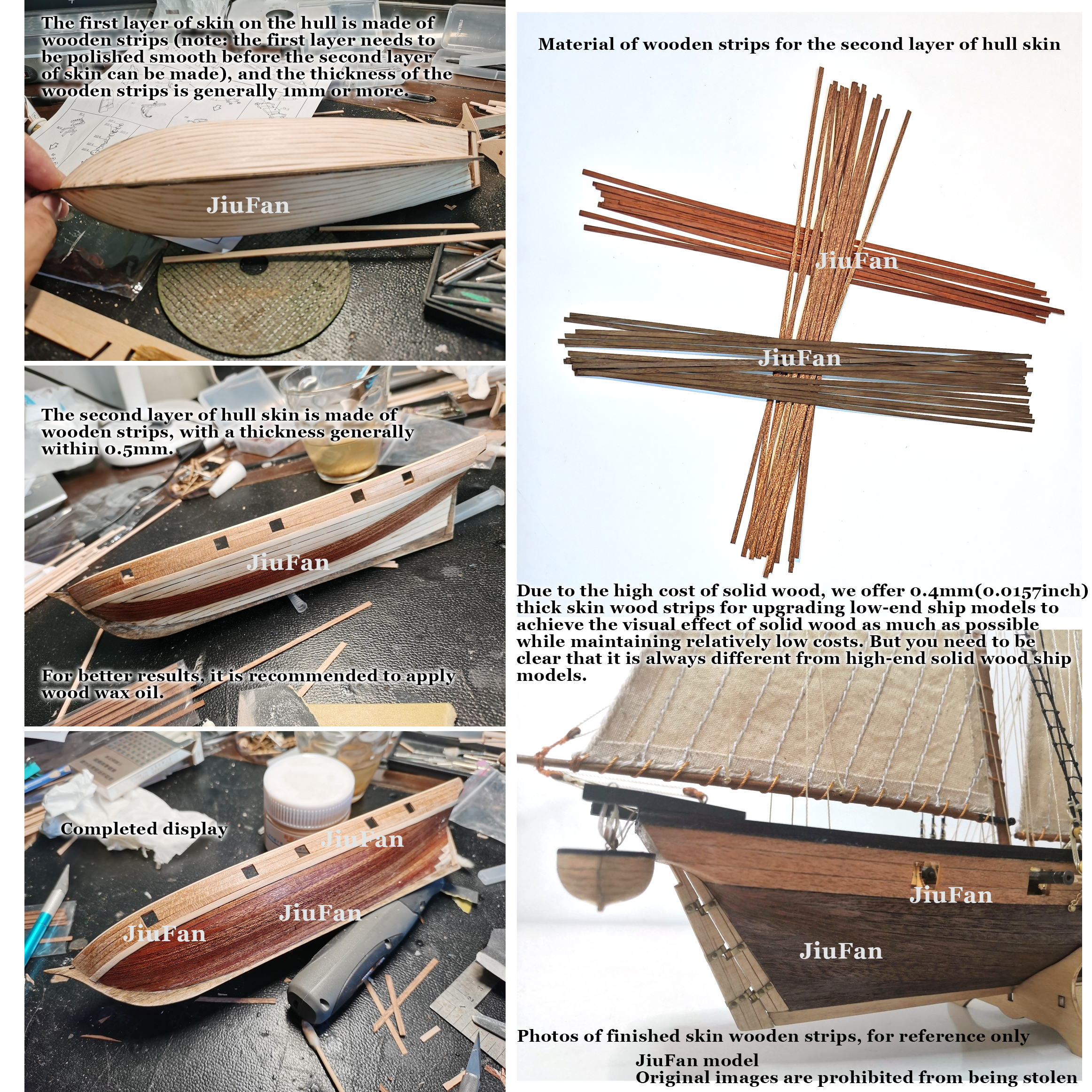
Upgrade Parts for Wooden Ship Models – Second Layer (Surface Decoration) Hull Planks (Solid Wood Thin Plates)
Series:Universal
View Details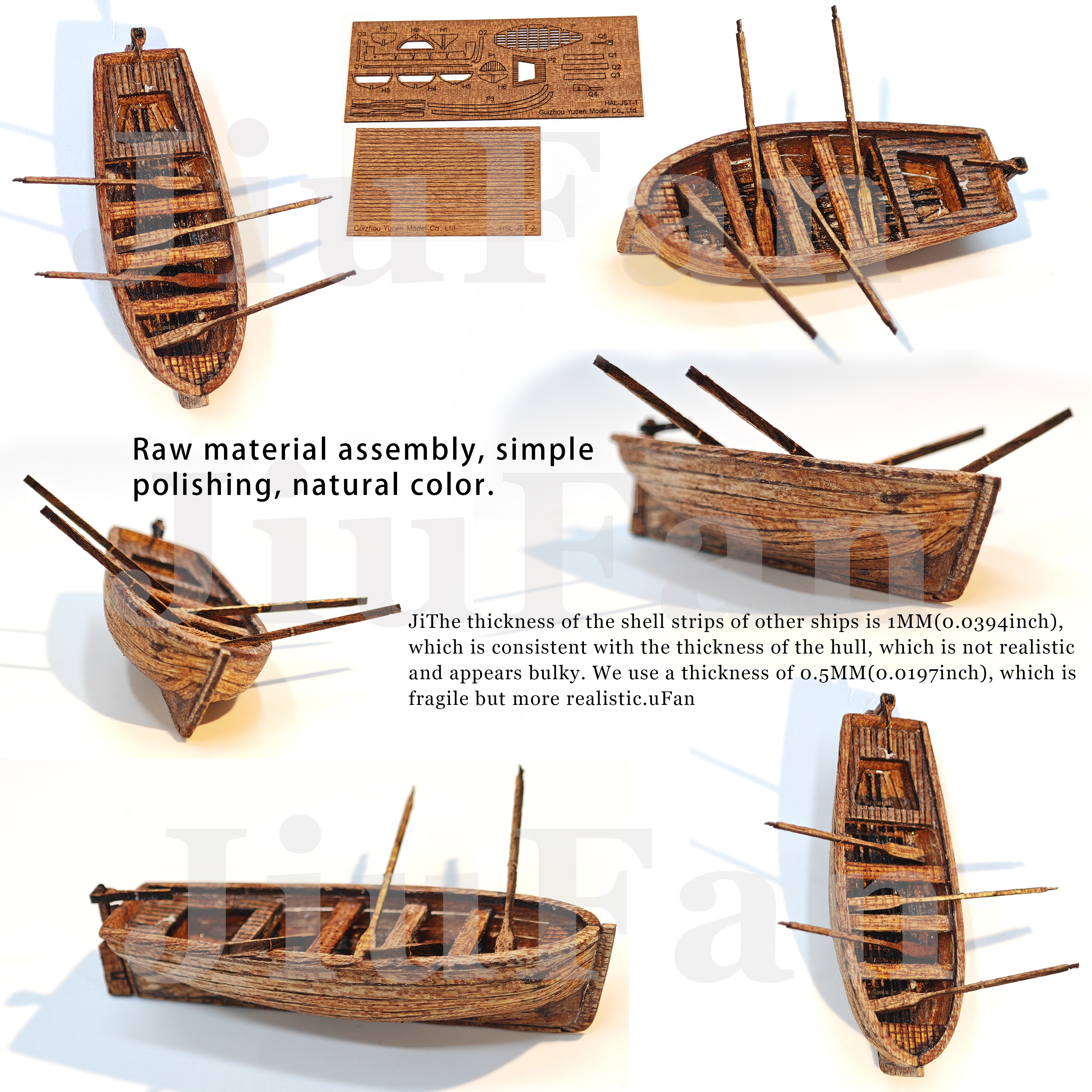
Lifeboat – Upgrade Parts for Ship Models, Universal & Usable Separately (1:100)
Series:Universal
View Details